Nanotechnology
Can Nanotechnology Solve Big Problems by Working at an Extremely Small Scale?
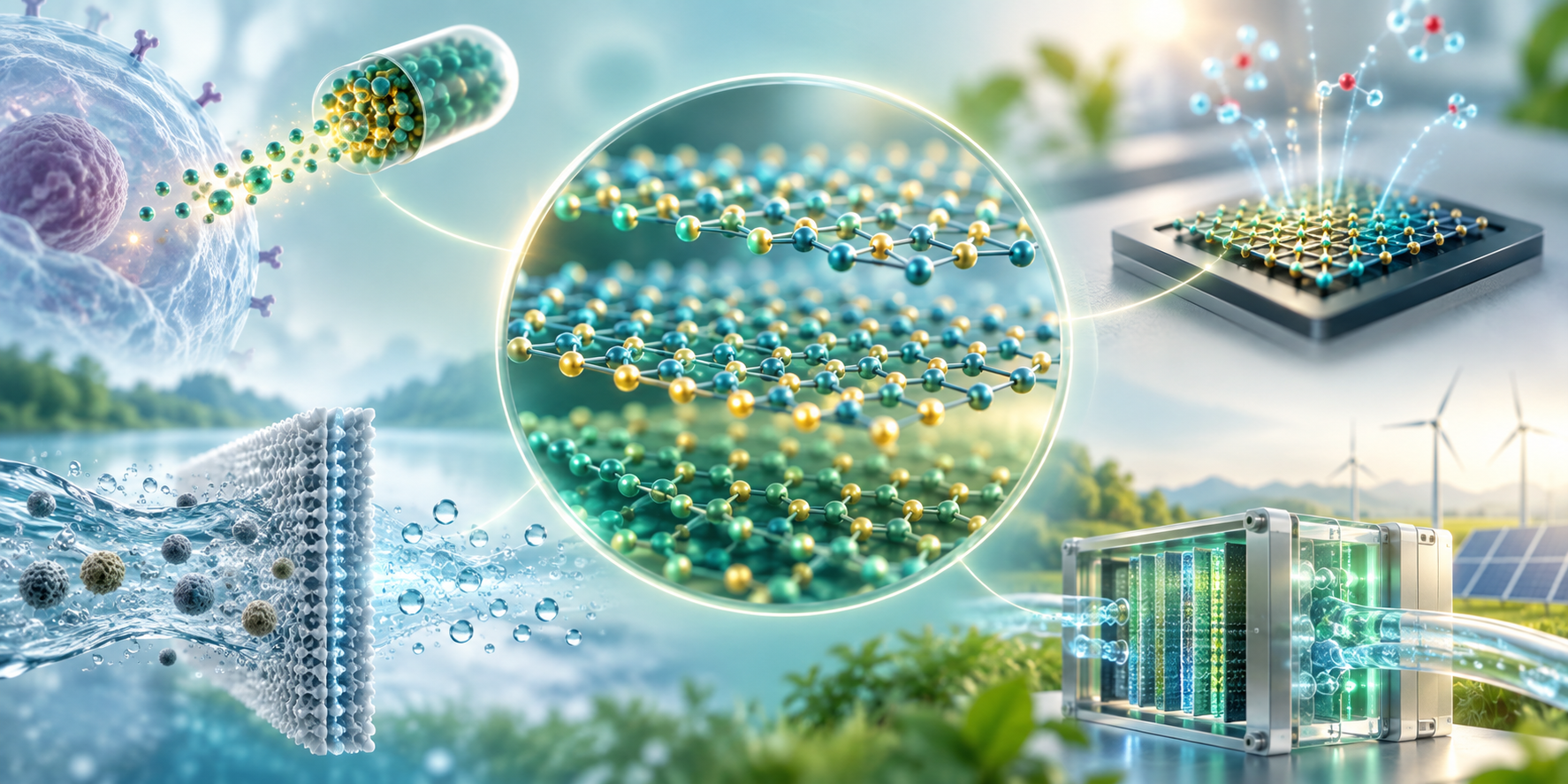
What Is Nanotechnology?
Nanotechnology involves designing and controlling materials at the scale of atoms and molecules, typically between 1 and 100 nanometers. At this size, familiar materials can develop different optical, electrical, chemical and mechanical properties. Researchers use these nanoscale properties to create more precise, sensitive, lightweight and efficient technologies.
Where Is Nanotechnology Creating Helpful Change?
Medicine and drug delivery
Nanoparticles are being explored to carry treatments toward specific cells, potentially improving precision while reducing effects on healthy tissue.
Early detection and sensing
Nanosensors may detect very small quantities of biomarkers, pollutants or chemicals before conventional methods can identify them.
Clean water and the environment
Nanostructured membranes and coatings can improve filtration, remove contaminants and support environmental monitoring.
Energy and electronics
Graphene, quantum dots, MXenes and other nanomaterials are being studied for better batteries, solar cells, flexible electronics and smaller devices.
What Is the Research Scope for RQL Students?
Students can select one application, study the nanomaterial involved and compare its advantages with its remaining limitations. A project based on literature can examine performance, safety, stability, cost, environmental impact and the challenges of moving a promising laboratory idea into wider use. This makes nanotechnology a flexible RQL track connecting physics, chemistry, biology, materials science, medicine and engineering.
RQL Research Question
Which application of nanotechnology could create the greatest impact in the real world, and what challenges must be overcome before it can be widely used?